Services
Owners rarely need help finding the damage after a storm. They need help translating what they're looking at into a report a claims adjuster will actually work from. That's where our part of the process fits: we inspect the roof, build the documentation package, and stand on the roof with the adjuster when the claim moves to that stage. What we don't do is file the claim, negotiate the settlement, or act as the owner's advocate against the carrier - that's public-adjuster territory, and it isn't ours.
Coordinating the Roof-Side Timeline
A commercial claim moves faster when the roof documentation is ready before the adjuster asks for it. We schedule the inspection as soon as it's safe to access the roof, get photos and measurements logged the same day where possible, and keep the report organized so it can go straight to the owner, the broker, or a public adjuster if one is already involved. If the adjuster's roof walk gets scheduled before our report is finished, we prioritize getting it done in time rather than showing up unprepared.
What the Documentation Package Includes
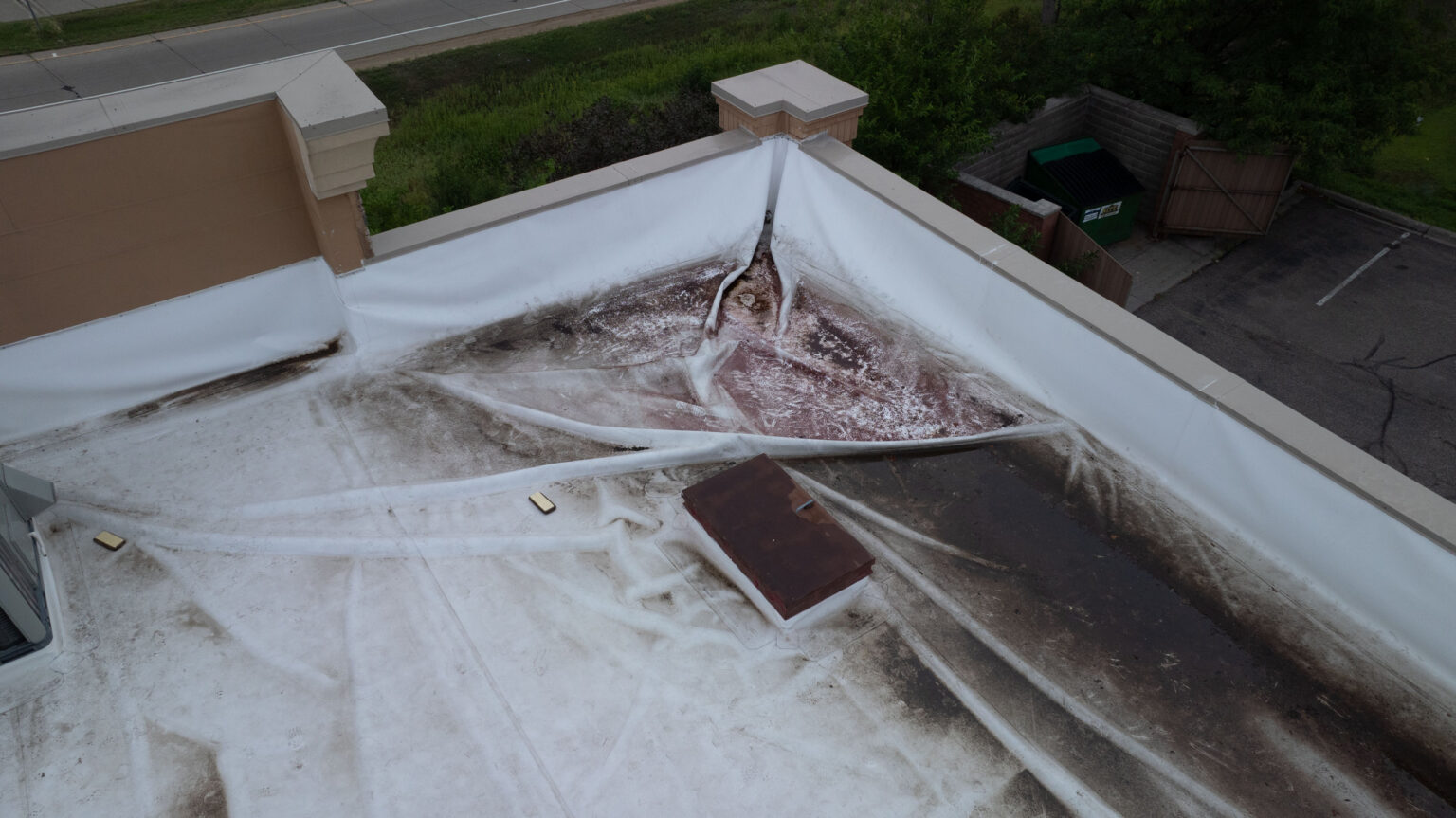
Every claim-support inspection produces the same core record: dated, location-tagged photos of each damaged area, measurements of the affected field, moisture readings anywhere wet insulation is suspected, and a written scope that separates storm-caused damage from pre-existing wear. On membrane roofs we note seam condition and fastener spacing near any lifted edge. On older built-up and modified bitumen roofs common in Stockton's downtown core, we document patch history separately, since a claims reviewer will want to know what was already repaired before the storm versus what the storm itself caused.
Standing on the Roof With the Adjuster
When the adjuster's inspection is scheduled, we're available to walk the roof alongside them. Having already marked and photographed the damage means the meeting confirms a documented scope instead of starting the inspection over. We answer technical questions about the roof assembly, age, and code requirements directly. We do not tell the adjuster what the carrier should pay - that decision sits with the carrier - but we make sure it's being made against a complete, accurate picture of roof condition.
Working Alongside a Broker or Public Adjuster
Some owners already have a broker or public adjuster managing the claim before they call us. In that case, our documentation goes directly to that team rather than to the carrier ourselves. We coordinate scheduling so our roof inspection lines up with whatever timeline the claim is already on, and we'll answer follow-up questions about the roof condition report as the claim moves forward.
When the First Scope Looks Incomplete
If an approved scope comes back missing sections of visible damage, code-required upgrades, or matching requirements on a partial repair, we can re-inspect and put together a supplemental report. This happens more often than owners expect on roofs with multiple storm cycles in the same season, where a first-pass inspection may have caught the most obvious damage but missed a secondary area that opened up during a later windstorm or wet spell.
We're your roofing contractor, not a public adjuster - we document and substantiate the roof damage so you and your adjuster work from an accurate scope, not a rushed estimate.
Documentation Across Stockton's Building Types
Claim coordination looks different depending on what's on the roof. Distribution and fulfillment buildings along the I-5 and Highway 99 corridor tend to carry large, uniform single-ply fields where storm damage can be scattered across a wide area with long walk distances between findings - the documentation has to stay organized by roof zone so nothing gets lost between the inspection and the report. Port of Stockton warehouse and transload properties often mix older built-up sections with newer metal or coated roofing, which means separating storm damage from long-standing wear takes more care. Downtown office, retail, and mixed-use buildings frequently have a patch history that predates current ownership, so we document what was already there before assigning cause to the recent storm.
Why the Roof-Side Record Matters Even Before a Claim
Some owners bring us in before there's an active claim, usually after a storm event they suspect caused damage but haven't yet reported. In that case we still build the same documentation package - photos, measurements, moisture readings, and a written scope - so the owner has an accurate picture of the roof before deciding whether to file. That approach avoids two common problems: filing a claim without knowing the real extent of the damage, or not filing at all because the visible damage looked minor from the ground.
Questions Owners Ask
Insurance Claim Documentation FAQ
What does claim coordination mean if you don't negotiate the claim?
We handle everything on the roof side: inspection, photo and moisture documentation, a written scope, and meeting the adjuster on the roof. The owner or their broker still files the claim and manages the settlement conversation with the carrier.
Do you work with public adjusters, or only directly with owners?
Both. If an owner already has a public adjuster or broker involved, we provide the same roof inspection report and photo documentation to that team. We do not act as the public adjuster ourselves.
How is this different from a general roof inspection?
A claim-focused inspection follows documentation standards adjusters expect: dated, location-tagged photos, measurements, moisture readings, and a scope that separates storm damage from pre-existing wear. A routine maintenance inspection isn't usually organized that way.
Can you help after a claim has already been partially approved?
Yes. If the approved scope looks incomplete, we can re-inspect and document conditions that may not have been part of the original review, then give the owner a supplemental report for their broker or carrier.