
Services
Stockton's food-service landscape reflects the city's position as the agricultural heart of the Central Valley, with family-owned taquerias and Filipino eateries in the Miracle Mile corridor operating alongside major QSR franchises on Pacific Avenue and the growing restaurant clusters in the Hammer Lane commercial zone. The city's hot, dry summers push rooftop surface temperatures on dark-cap modified bitumen systems above 180 degrees, while the dense winter tule fog that settles over the valley floor for weeks at a time creates persistent moisture conditions that accelerate surface oxidation and seam degradation. Stockton restaurant operators managing flat roofs face a climate that is extreme in both directions.
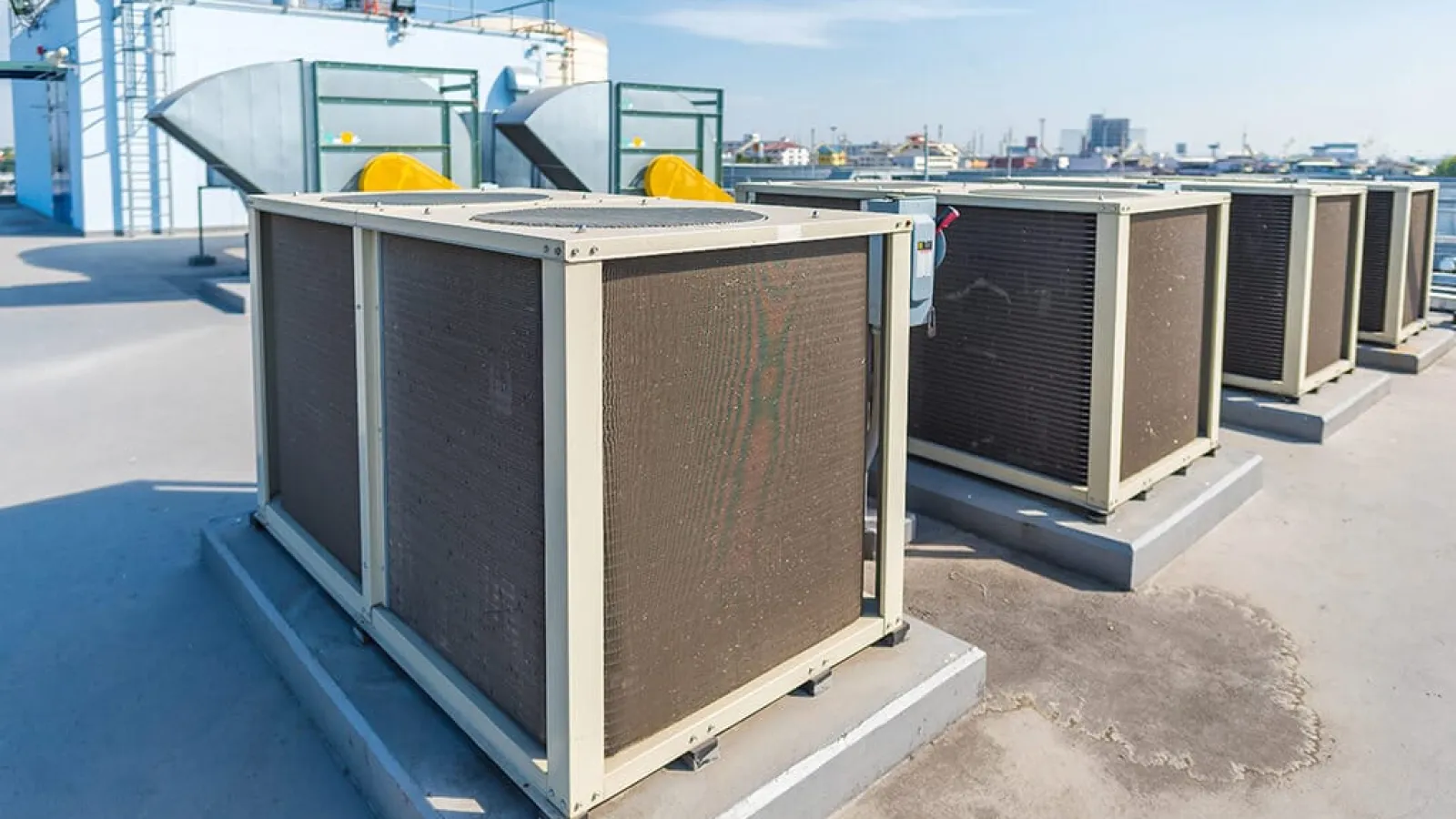
Kitchen exhaust systems on Stockton restaurant roofs work harder than those in coastal California markets because the city's summer heat forces kitchen HVAC into overdrive, increasing exhaust fan run times and pushing more grease-laden air through roof penetrations per service. Exhaust curbs on a busy Pacific Avenue drive-through operation may see continuous fan operation for fourteen or more hours daily during July and August. That extended run time accelerates grease accumulation at the curb perimeter, and in Stockton's heat, the grease bakes onto surrounding membrane surfaces, bonding in a way that is difficult to remove without damaging underlying materials.
TPO single-ply membrane is the most cost-effective roofing solution for Stockton's restaurant buildings because its white reflective surface directly addresses the cooling load problem that drives energy costs sky-high during Central Valley summers. Title 24 compliance-California's energy efficiency mandate-increasingly favors cool-roof installations for commercial occupancies, and a new 60-mil TPO roof on a Stockton quick-service building can earn Title 24 compliance credit while simultaneously improving the building's HVAC efficiency. That dual benefit makes TPO the clear first choice for both new construction and re-roofing projects.
The Port of Stockton's industrial corridor and the south-side neighborhoods have seen investment in casual dining and brewery operations that occupy converted warehouse and light-industrial structures. These buildings often have aged steel deck substrates with existing moisture infiltration from years of deferred maintenance. Before a new membrane is installed, infrared scanning of the existing roof identifies wet insulation that would otherwise trap vapor beneath the new system and compromise adhesion over time. Removing compromised insulation sections and replacing with new polyiso board is essential for achieving the full design life of the new membrane.
Stockton's walk-in cooler and freezer roofing challenge differs from most California markets because the valley's winter fog season creates near-saturation humidity at ground level while building interiors remain warm from kitchen operation. That temperature and humidity differential drives moisture into cooler unit housings and toward roof deck penetrations faster than in drier inland climates. Closed-cell polyurethane foam applied generously at cooler curb bases-supplemented by peel-and-stick self-adhering flashing membrane wrapping the curb frame-creates a layered vapor barrier system robust enough for valley fog conditions.
Health inspections from the San Joaquin County Environmental Health Division evaluate kitchen ventilation effectiveness as part of food facility permitting. A grease exhaust system whose roof curb has shifted or whose flashing has separated may be pulling inadequate volume through the hood, creating both a fire risk and a health code deficiency. Stockton restaurant operators scheduling their annual hood cleaning and duct inspection should simultaneously arrange a roof curb inspection to confirm flashing integrity and curb alignment, since the two systems are interdependent.
Franchised QSR chains have expanded significantly along the Hammer Lane and March Lane commercial corridors in north Stockton, bringing standardized prototype building designs that specify roofing systems by brand. Those specifications typically call for 45-mil or 60-mil TPO from a named manufacturer, installed by a certified contractor. Stockton roofing contractors who maintain active certifications with Carlisle SynTec and GAF can execute these projects under brand requirements without requiring the operator to import crews from Sacramento or the California, which adds both cost and scheduling uncertainty.
Tule fog creates a deceptive maintenance environment for Stockton restaurant operators. Because the fog blankets the city without producing measurable rainfall, rooftop inspections performed during fog season may not reveal active leaks that only manifest during actual rain events. The November-through-February inspection schedule should be timed to follow the first significant rain events of the season rather than calendar dates alone, allowing inspectors to observe drainage patterns and identify ponding zones while the roof is actually wet.
Stockton's restaurant industry carries higher-than-average sensitivity to any service disruption, given the city's competitive dining market and tight margins. Emergency roof repair capability-available on a same-day basis through a contractor with a Stockton-area crew on standby-is worth the small annual retainer cost for multi-unit operators running several QSR or casual dining locations in the metro. A two-hour response time during a January rain event can prevent a single leak from shutting down a kitchen and triggering a health inspection follow-up that adds days of closure.
- How does California's Title 24 energy code affect roofing choices for Stockton restaurants?
- Title 24 requires that most new or replacement commercial roofs in Stockton meet cool-roof reflectance and emittance standards, which effectively mandates white or light-colored membranes like TPO or PVC for flat-roof assemblies. Meeting these requirements is not optional-the building department requires documentation of membrane solar reflectance as part of the permit package. A compliant cool roof also reduces air conditioning loads substantially, which matters greatly in Stockton's triple-digit summers.
- Why is infrared scanning recommended before re-roofing a Stockton commercial restaurant building?
- Infrared thermal scanning identifies areas where moisture has infiltrated the existing insulation layer, which cannot be seen from the surface. Installing a new membrane over wet insulation traps vapor that degrades adhesion, promotes mold growth, and can cause membrane blistering within the first year of service. Removing and replacing wet sections before installation ensures the new system achieves its full design life.
- What causes grease to bake onto Stockton restaurant roof membranes in summer?
- Rooftop surface temperatures in Stockton can reach 170 to 190 degrees on dark-colored membranes during July and August, and even white TPO surfaces reach 140 to 150 degrees. Grease residue vented from kitchen exhaust systems liquefies and spreads at those temperatures, then bonds chemically to the membrane surface as it cools overnight. Quarterly cleaning with an approved degreaser prevents permanent bonding and extends membrane service life.
- Can a Stockton restaurant operator get a roof replacement done without closing the business?
- Yes, phased work sequenced around service hours is standard practice for occupied restaurant buildings. Crews typically work the membrane replacement in sections after the kitchen closes for the night, covering open areas with temporary waterproofing before leaving each shift. For most single-story Stockton QSR buildings, full replacement can be completed in three to five overnight sessions without a single full-day closure.
- How do tule fog conditions affect roof inspection and leak detection in Stockton?
- Tule fog deposits moisture on roof surfaces but does not typically produce enough volume to reveal active leak pathways the way rain does. Inspections should be scheduled after the first significant rain events each winter season, allowing inspectors to evaluate drainage patterns, identify ponding zones, and observe active seepage at penetrations. A fog-season inspection alone may miss leaks that only activate under rain-level water loads.
Questions Owners Ask
Acrylic Roof Coatings FAQ
What is the realistic first step for acrylic roof coatings at an occupied Port of Stockton property?
We start with a roof walk, interior leak review, drain and edge check, and photos that show whether the service can be repaired, restored, recovered, or should move toward replacement.
How fast can you look at acrylic roof coatings after wind or heavy rain?
Active leaks and roof openings get priority. A full diagnosis for acrylic roof coatings is more accurate once conditions are safe enough to inspect seams, edges, drains, rooftop units, and interior leak paths.
Can acrylic roof coatings be handled without shutting down the building?
Most commercial roof work can be phased around operations when conditions allow. We plan access, noise, parking, material staging, interior protection, and daily dry-in before work starts.
What usually makes acrylic roof coatings more expensive than the first rough number?
Wet insulation, deck repair, poor access, missing overflow drainage, custom edge metal, after-hours work, Title 24 requirements, and many penetrations can change the final scope.
Will you document acrylic roof coatings for ownership, tenants, or insurance?
Yes. We provide practical photo records and scope notes for roof condition, completed work, remaining concerns, and next recommendations. For claims, the carrier still decides coverage.